sábado, 11 de agosto de 2018

AwesomE Tutories. Reading


The Beginner's Guide to Reading the Bible
I rounded the corner and saw her. She stood frozen, open-mouthed in front of the rows of Bibles in the religion section at Barnes and Noble. She wanted to read the Bible; she hadn’t known there would be so many options.
Her facial expression said it all: I have no idea where to start.
Scores of people feel overwhelmed when it comes to reading the Bible. Maybe, even now, you’re shaking your head in agreement, thinking, Yes. That’s me.
My new friend looked visibly relieved when I asked if she’d like help choosing a Bible. She looked even more relieved when I showed her where and how to start reading.
May I reach across the computer screen and help you, too?
These are my top suggestions for beginners to the Bible:
1. Choose a Bible version that’s understandable and easy to read.
Here’s the flat out truth: If we don’t understand it, we won’t read it. 
The Bible was originally written in Hebrew and Greek. One of the earliest translations to English was the King James Version (KJV) of the Bible, but today we have a variety of versions to choose from. Some translations focus on being more precise and are best for Bible study, while others focus on readability and are great for devotions. 
If you’re a beginner, I recommend the New Living Translation (NLT), or a study Bible in the English Standard Version (ESV) or New International Version (NIV). The NLT version of the Bible is most readable while still being literal in its translation; the Study Bibles contain footnotes that explain difficult to understand passages of Scripture. 
You can also download a Bible app or read the Bible at biblestudytools.com. These are great tools for beginners and veterans alike.

2. You don’t have to start at the beginning.
The Bible contains 66 separate books compiled into one book. The 39 books of the Old Testament are the story of God and his people before the coming of the Messiah—Jesus. The 27 books of the New Testament pick up the story beginning with the birth of Jesus. 
If you’re new to the Bible, the best place to start is the Gospel of John. This book (the fourth book in the New Testament) is John’s eyewitness account of the life of Jesus. As one of Jesus’ closest disciples, John’s account is both riveting and informative. 
John’s purpose in writing is to help us believe, making it the ideal place to start. “These things were written to help you believe that Jesus is the Messiah, the Son of God, and that by believing you may have life in his name” (John 20:31).

3. Pick a book of the Bible and work your way through it.
If you’re anything like me, you need a Bible reading plan or you’ll waste precious minutes thumbing through the Bible, never quite landing. So pick one book of the Bible and read a little each day, one chapter, perhaps. 
If you read one chapter of John a day, (which will take no more than 5-10 minutes) you’ll read John in its entirety in 21 days. 
After reading John, move on to the other gospels – Matthew, Mark or Luke. Next read Philippians, Ephesians and Colossians, which provide practical encouragement and instruction for living the Christian life. Romans is jam-packed with essential doctrine. Genesis explains how everything began. Psalms is filled with heartfelt prayers that offer encouragement for every season of life.
Work your way through one book at a time, and you’ll never find yourself fumbling for where to read again. 

4. Read a little every day.
Getting God’s Word into your life doesn’t have to take long. Start small—five or 10 minutes is better than none. Sometimes less is more, especially when reading less means you’ll actually remember more.
Chose a time and place that’s convenient for you. Many people read their Bible first thing in the morning, choosing to spend time with God before daily distractions get in the way. But if mornings aren’t your thing, don’t sweat it. That you read God’s Word is more important than when you read God’s Word. Personally, I love to read my Bible at a local coffee shop, but I once read through the entire Bible while waiting in carpool lines. 

5. Pray before you begin.
Pause before you open your Bible and ask God to speak to you. Remember, the Bible is God’s Word; it is God’s love letter written to His people, which includes you. 
Ask God to help you understand His Word. Ask God use His Word to teach you, to direct you and even to re-direct you, when necessary. Ask Him to use His Word to help you know Him and love Him. 
Jeremiah 29:13 says, “You will seek me and find Me, if you seek Me with all your heart.”God loves to reveal himself to those who seek Him.

6. Write it down.
 As you read the Bible ask two questions:
·         What does this teach me about God?
·         What does this teach me about how I should live?
No doubt, as you read you’ll find one or two verses that seem to leap off the page. Maybe they speak to an issue you’ve been grappling with; maybe they answer a long held question; maybe they give you comfort or encouragement; maybe they provide an example to follow or avoid. 
When a verse resonates with you, stop and write it down, word for word. Pause to let the message sink in because these words are God’s words to you.
This practice has cemented God’s Word into my thoughts in countless ways. Sometimes I keep the verse with me throughout the day. Sometimes I ask God to help me remember it when I need it. Sometimes I memorize it. Be intentional about getting God’s Word into your thoughts and you’ll soon see your relationship with God thrive and your life change.
The Bible was never meant to merely inform us; the Bible was meant to transform us.
It’s been years since I encountered the gal at Barnes and Noble but when I think of her, I smile. Her story is our story. We all begin somewhere in our relationship with God.
And we all need someone to show us how.


martes, 4 de octubre de 2016

1ro Inglès

ENGLISH FOR LIFE

 THE ALFABET
Resultado de imagen para THE ALFABET


THE NUMBERS


THE DAYS OF THE WEEK


THE MONTHS OF THE YEAR


Resultado de imagen para MONTHS OF THE YEAR


THE SEASONS OF THE YEAR


Resultado de imagen para SEASONS OF THE YEAR


Resultado de imagen para SEASONS OF THE YEAR


PRONOUNS AND VERB TO BE


GREETINGS AND FAREWELLS


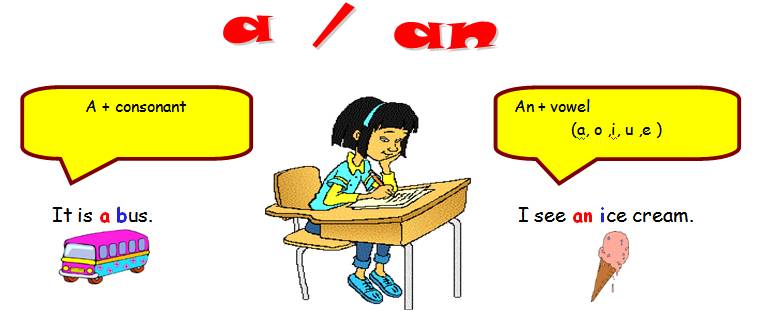
A OR AN = UN/UNA


Resultado de imagen para A OR AN


THERE IS OR THERE ARE = HAY
Resultado de imagen para THERE IS OR THERE ARE


Resultado de imagen para THERE IS OR THERE ARE


CONVERSATION 1

Mr. Mathew: hello Miss JPR. How are you today?

miss JPR: I am so nice. thank you very much. how about you?

Mr Mathew: I am very good too. what is your name?

Miss JPR: my name is JPR. and you?

Mr. Mathew: my name is Mathew. Excuse me Miss JPR, what day is today?

Miss JPR: today is fryday Mathew. why?

Mr Mathew: because tomorrow is my birthday

Miss JPR: ohh! really? Congratulations for you! your birthday will be on saturday

Mr. Mathew: thank you very much. when is your birthday miss JPR? 

Miss JPR: it´s on July 25. 

Mr. Mathew: ok. see you tomorrow in class.

Miss JPR: there i will be. nice to meet you Mathew

Mr. Mathew: nice to meet you too miss JPR. take care!

Miss JPR: see you! good bye!

Mr. Mathew: bye.


domingo, 28 de agosto de 2016

4to de Secundaria Matemática


Criterios de Evaluación


Evaluación


  • Cuaderno-----------------------------------------------------------------------20puntos
  • Seminarios  -------------------------------------------------------------------15 puntos
  • Participacion Activa -------------------------------------------------------- 10 puntos
  • Practicas/investigaciones---------------------------------------------------15 puntos
  • Pruebas-------------------------------------------------------------------------15 puntos
  • exposiciones _______________________________________ 15 puntos
  • Autoevaluación----------------------------------------------------------------05 puntos
  • Co-evaluación-----------------------------------------------------------------05 puntos
Criterios cualitativos
Resultado de imagen para logica matematica
  • asistencia
  • puntualidad
  • responsabilidad autenticidad
  • excelencia
  • perspicacia
  • respeto
  • pulcritud
  • modales
  • honra

Unidad I: Logica Simbolica

Primera tarea 
Resultado de imagen para logica matematica
Guia de estudio I

1.- ¿Que es la Lógica?
2.- ¿Que es una premisa y una conclusión?
3.- ¿En que consiste el método inductivo?
4.- ¿En que consiste el método deductivo?
5.- ¿ Que es la instuicion?
6.- ¿ Cuales son las clases de lenguajes?
7.- ¿ Que es una proposición?
8.- ¿ En que consiste el valor de verdad?
9.- ¿ Que es una variable lógica?
10.- ¿ Que son proposiciones simples y compuestas?
11.- ¿ Que es una forma proposicional?
12.- ¿ Defina los conectivos lógicos?
13.-  investigue sobre los siguientes personajes: lugar y fecha de nacimiento y muerte, aportes que hizo a la matemática y alguna frase interesante.
  • Socrates
  • Platon
  • Tales de Mileto
  • Aristoteles
  • Pitagoras
  • Arquimedes


Logica Simbolica: Metodos de razonamientos

Segunda tarea

Guía de estudio II

1) ¿ Que es un teorema?
2) ¿ Que es un corolario y un axioma?
3) ¿ Como esta constituido un sistema axiomático?
4) ¿ Que es una forma argumental?
5) ¿ Que es un argumento?
6) ¿ Como pueden presentarse las formas argumentales?
7) ¿ Que es una demostración?
8)  defina los métodos de demostración. de ejemplo.
9) ¿ En que consiste el razonamiento del tercero excluido?
10) ¿ Que son cuantificadores?
11)  Defina cada cuantificador y de ejemplo de cada uno.


Unidad II: Estructuras Algebraicas nota: esta en la unidad VIII de su libro.

Tercera tarea

Guía de estudio III

1) define los diferentes conjuntos numéricos, diga cuales elementos los componen,
 sus propiedades, cuales son las operaciones internas en cada conjunto y haga ejemplos en cada uno.
2) dibuje un diagrama de los conjuntos numéricos.
3) ¿ Que es una estructura algebraica?
4) ¿ En que consiste la ley de composición interna?
5)  desarrolle las propiedades que se pueden definir en un conjunto dado.


Cuarta tarea  nota: esta en la unidad VIII de su libro.


Guía de estudio IV

1) ¿Como esta constituida una estructura algebraica?
2) ¿ Cual es la estructura algebraica mas simple?
3) ¿ Que es el álgebra moderna?
4) ¿ Que es un monoide o semi grupo?
5) ¿ Que es una estructura algebraica de grupo. Cuando el grupo es abeliano?
6) ¿ En que consiste la estructura algebraica de anillo. Cuando es unitario y cuando es conmutativo?
7) ¿ Cuando decimos que dos números son divisores de cero?
8) ¿ Que es una estructura algebraica de cuerpo?
9) ¿ Que es una tabla de operaciones o tabla de doble entrada? 


Unidad III: Geometría Plana   
Nota: recuerda que tienes que llevar el juego de regla que le sumará 5 ptos. a tu promedio.

Resultado de imagen para geometriaQuinta Tarea

Guía de estudio V     Paginas 41-83   Libro Blanco
                                   Paginas 49-102  Libro Morado


Primera Parte

1)      ¿Qué es la geometría?
2)     Hable brevemente sobre la historia de la geometría.
3)     Hable sobre la aplicación de la geometría.
4)     Define punto, recta y plano.
5)     ¿Qué son figuras geométricas?
6)     Defina geometría plana y geometría del espacio.
7)     Diga que es un axioma, un postulado, un teorema y un colorario. Establezca diferencias.
8)     ¿Qué son figuras congruentes?
9)     ¿Qué son partes homologas y lugares geométricos?
10)  Escribe las consideraciones sobre la línea recta.
11)  Escribe las consideraciones sobre el plano.

Segunda Parte


12)  ¿Cuáles son las posiciones relativas de dos líneas rectas?
13)  Haga las construcciones relativas a la línea recta.
14)  Desarrolle las características de un ángulo.
15)  ¿Cuáles son los diferentes sistemas de medidas de ángulos.
16)  ¿Cómo se clasifican los ángulos?

Tercera Parte


17)  ¿Qué son rectas perpendiculares, oblicuas y transversales?
18)  Desarrolle los ángulos formados por dos rectas paralelas y una recta secante o transversal.
19)  Desarrolle los postulados y teoremas que se dan entre los ángulos formados por dos rectas paralelas y una secante.

Cuarta Parte


20)  ¿Qué es un polígono?
21)  ¿Cómo se clasifican las líneas?
22)  ¿Qué es una quebrada o poligonal?
23)  ¿Qué es un polígono regular?
24)  ¿Cómo se clasifican los polígonos?
25)  ¿Qué es una región poligonal?
26)  ¿Qué es un conjunto poligonal convexo?
27)  ¿Cómo se clasifican los polígonos de acuerdo a sus lados?
28)  ¿Qué son polígonos inscritos y circunscritos?

Quinta Parte


29)  ¿Cómo se determina el número de diagonales que se pueden trazar de un polígono?
30)  ¿Cómo se determina la medida de un ángulo interior de un polígono regular?
31)  ¿Cómo se determina la suma de los ángulos internos de un polígono regular convexo?
32)  ¿Cómo se determina la medida de un ángulo exterior de un polígono?
33)  ¿Qué es el perímetro?
34)  ¿Qué se entiende por apotema en un polígono regular?

35)  Desarrolle los enunciados de teoremas de polígonos.


Evaluación de la segunda  parte  11 de enero 2017

I)   mencione objetos de la vida real que describen angulos.

II) selecciona la respuesta correcta

1) sistema de medida de angulo que divide la circunferencia en 400 partes iguales.
a) sexagesimal               b) circular                     c) centecimal

2)  sistema de medida de angulo donde la medida del radio es igual a la medida del arco descrito rectificado.
a) sexagesimal               b) circular                     c) centecimal

3) un radian es equivalente a: 
a) 60º                           b) 57º                                      c) 57º 18`

4) es un angulo agudo.
a) 76º             b) 90º                   c) 360º

5) es un angulo plano.
a) 180º                    b) 360º                      c) 0º

II) construye

1) dos angulos complementarios

2) tres angulos consecutivos

3) dos angulos adyacentes

IV) halle el complemento y el suplemento de los siguientes angulos.

1) 70º

2) 12º 39`47``

3) 84º 50`


UNIDAD III. FUNCION MATEMATICA.  24 de Marzo 2017
Paginas 86-120 del libro blanco
paginas  105-142 del libro morado

Sexta Tarea

1) defina los sistemas de coordenadas cartesianas. haga un ejemplo en cada caso.

2) ¿ Que es un par ordenado?

3) ¿En que consiste el conjunto producto?

4) ¿ Que es una relacion binaria?

5) ¿ Que es una funcion o relacion funcional?

6) ¿ Como se clasisfican las funciones? haga un ejemplo de cada una.

7) Desarrolle las consideraciones sobre la linea recta.

8) Define proporcionalidad inversa y directa.

9) ¿ Que son desigualdades?

10) ¿ Cuales son las propiedades de las desigualdades?

11) ¿ En que consisten los intervalos de los numeros reales? Explique como puede ser su clasificacion.

12) ¿ Como se pueden representar los intervalos?

13) ¿ como se calcula la longitud y el punto medio de un intervalo?

14) ¿ Que es una inecuacion?